


Selecting the right adhesive reliably, based on material, application and load requirements
Anyone looking to find the right adhesive should not start by searching for a product name, but rather by defining the requirements. An adhesive is only suitable if it matches the materials, the load and the application conditions. Whether metal, plastic, wood, glass, ceramic or rubber, the same key questions are always crucial for a reliable bond:

• What materials need to be bonded?
• How large is the bond area and how wide is the gap?
• What forces will act on the bond later on?
• How quickly does the adhesive need to set (initial bond) or cure?
• What temperature and environmental conditions will it be exposed to?
Considering these factors systematically makes it much easier to select the right adhesive.
And why use adhesive?
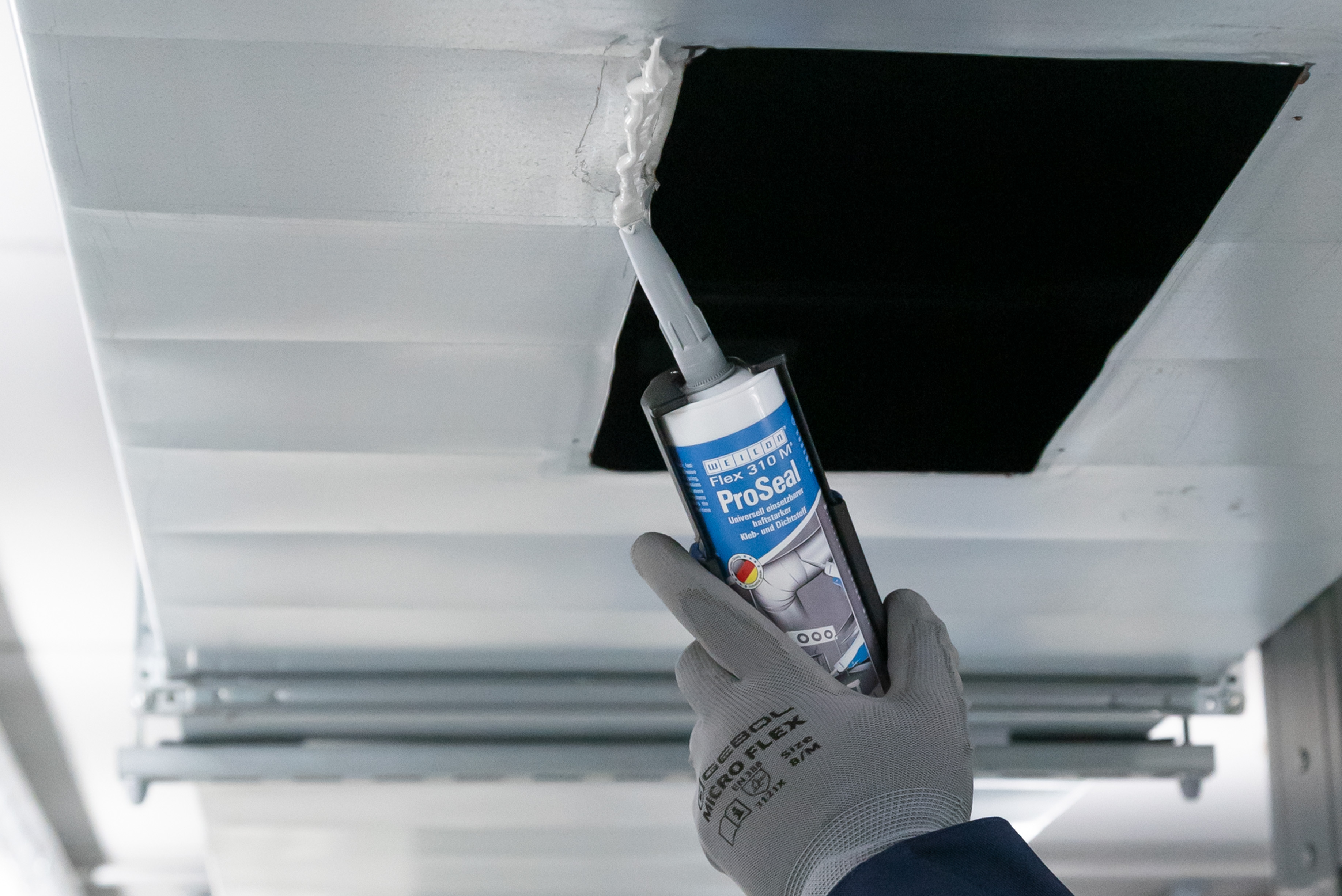
1. Versatility
A wide variety of materials can be joined through bonding – e.g. metal, plastic, wood, glass, ceramic or paper – with and among each other.
2. Weight
In contrast to screws, for example, adhesive is very light. The use of adhesives can therefore save a lot of weight.
3. Material protection
Bonding does not change or deform the surface – unlike, for example, the high temperatures involved in welding.
4. Visual appearance
The use of adhesives is also recommended for visual reasons. Especially when transparent adhesives are used, a joint is not even noticeable.
5. Loads
Adhesive bonding can achieve a more even transmission of forces. When riveting or screwing, a point load occurs.
6. Sealing
A great side effect of some adhesives is their absorbing and sealing effect.
7. Dispensing
Adhesives can be easily dispensed and applied in a highly targeted manner. Sometimes just a few drops are enough for enormously strong joints.
8. Equipment
Bonding can be carried out almost always and everywhere. No machines or expensive tools are required.
9. Repairs
Adhesives are especially useful in terms of sustainability: they enable repairs as an alternative to disposing of things.
10. Costs
Owing to the low material expenditure, fast application and the aspect of sustainability, adhesives can save time and money.
Choosing the right adhesive:
the 5 most important selection criteria

1. Which materials are to be bonded?
Identifying the material type is the first and most important step in selecting an adhesive. Not every adhesive bonds equally well to every surface. Typical questions include:
• Is metal being bonded to metal?
• Is plastic being bonded to plastic?
• Do different materials, such as metal and rubber, need to be bonded?
• Are you working with difficult-to-bond plastics such as PE, PP or PTFE?
Important: Particularly with plastics, it is often not just the material group that matters, but also the surface energy. Some plastics bond very well, while others require specially formulated adhesive systems or surface preparation.
Rule of thumb: The more precisely the material is identified, the easier it is to choose the right adhesive.

2. How large are the bond area and the gap?
Not every bond is a full-surface connection. Sometimes parts fit together precisely, while in other applications uneven surfaces or gaps need to be compensated for. The key point is: small, precisely fitting bond areas often require different adhesives than larger surfaces, uneven substrates or gap-filling applications.
As a general rule:
• Very thin bond lines often require low-viscosity adhesives.
• Uneven components or larger gaps usually require pasty or gap-filling adhesives.
Practical benefit: Correctly assessing the gap and bond area helps prevent typical problems such as incomplete wetting, insufficient bond strength or unnecessary adhesive consumption.

3. What loads must the bond withstand?
Choosing the right adhesive depends heavily on how the bond will be loaded in use. Important types of loading include:
• tensile loads
• shear loads
• impact and shock loads
• vibrations
• peel loads
• constant or alternating loads
In addition, it is important to determine whether the bond:
• should be rigid or flexible,
• requires high final strength,
• or should provide damping and accommodate movement.
Rule of thumb: A good bond is not only strong but also designed for the actual load conditions.

4. What temperature and environmental conditions will the bond be exposed to?
An adhesive can only provide long-term reliable performance if it is suited to the application environment. Relevant factors include:
• low or high temperatures
• moisture
• water
• UV radiation
• chemicals
• oils
• cleaning agents
• outdoor exposure
This aspect is especially important in workshops, assembly, maintenance and industrial applications. An adhesive bond may perform reliably indoors, but outdoor use or contact with chemicals and other media can place completely different demands on the bond. The key point is: the right adhesive must always be suited to the specific environment.

5. How much time is available for application and curing?
In many applications, it is not only the final strength that matters, but also the working time. Key questions include:
• How quickly do the components need to be fixed in place?
• Is there enough time for positioning?
• Is rapid handling strength important?
• When can the component be subjected to loads again?
Depending on the application, a very short curing time can be ideal – or problematic if parts still need to be positioned and aligned.
Important in practice: The best adhesive is of little benefit if its working time does not suit the workflow.
The WEICON Checklist:
A systematic guide to adhesive selection
Before every bonding job, these questions should be answered:
• Which materials are to be joined?
• How large is the bond area?
• Is there a gap to be filled or do uneven surfaces need to be compensated for?
• What loads will the bond be subjected to?
• Should the bond be rigid or flexible?
• What temperatures will the bond be exposed to?
• Is there exposure to moisture, water, UV radiation or chemicals?
• How quickly must the adhesive reach handling strength and fully cure?
• Is the application primarily assembly, repair or series production?
• Does the bond also need to provide sealing or dampen vibrations?
This checklist helps narrow down the options and avoid choosing the wrong adhesive.
How WEICON supports you in choosing the right adhesive
The right adhesive is best selected when the application and requirements are clearly defined. WEICON supports this process with:
• the Adhesive Finder
• technical advice
• practical information on adhesive bonding
• suitable solutions for repairs, assembly and industrial applications
Request expert advice now
FAQs
Which adhesive is the right one?
The right adhesive is the one that suits the material combination, the loads, the environment and the working time. There is no single adhesive that is best for every application.
What is most important when selecting an adhesive?
The most important factors are material, load, gap, environmental influences and time for processing and curing.
Can different materials be bonded to each other?
Yes, many adhesives are suitable for bonding different materials. What matters is that the adhesive is suited to the specific material combination.
Why does an adhesive sometimes fail to bond properly?
Common causes include using an unsuitable adhesive, contaminated surfaces, an incorrect gap size or loads and environmental factors that have not been considered.
How do I get the right adhesive recommendation faster?
The fastest way is to describe the application systematically: material, area, gap, load, temperature and environment.
Which adhesive is suitable for my application?
The right adhesive always depends on several factors: the materials to be bonded, the size of the bond area, any gaps that need to be filled, the loads the bond will be subjected to as well as temperature and environmental conditions. Therefore, the choice should not be based solely on the material, but always on the overall application.
Can I use a single adhesive for different materials?
Yes, many adhesives are suitable for bonding different materials. However, what matters is that the adhesive not only bonds well to both surfaces, but also suits the loading conditions, gap size and environmental conditions. That is why the entire application should always be considered, not just the material combination.